
Educational content only. Not medical advice.
Male pelvic floor guide
What your pelvic floor muscles do
Before any routine makes sense, it helps to know what you are training and where it sits. No anatomy background is assumed.
Men's Pelvic Fitness — Jakarta

An ordinary room, an ordinary posture. Nothing here needs a gym or a machine.
Where the muscles sit
Picture a sling stretched between the pubic bone at the front of the pelvis and the tailbone at the back. That sling is the pelvic floor, and in men it wraps around the base of the bladder and the rectum. It is not a single muscle but a group working together, which is part of why the contraction can feel hard to isolate at first. It sits inside the pelvis, so you will not see it move from the outside.
Two anchor points
The pubic bone at the front and the tailbone at the back give the group its span. Think of a hammock strung between them rather than a band around the middle.
A group, not one muscle
Several layers sit at slightly different depths and angles. They fire together, so a first attempt often brings in the stomach or the buttocks before the target muscles answer.
Hidden by design
The muscles sit inside the pelvis, behind bone and soft tissue. You will not see the movement in a mirror, and you will not check progress by looking. Feedback comes from feel and from how you breathe.
Support under everyday pressure
Support, not just squeeze
The pelvic floor holds the organs above it in place and responds when pressure inside the abdomen changes. Coughing, sneezing, lifting something heavy, and getting up from a chair all raise that pressure in a fraction of a second. A muscle group that responds well closes the outlet at the right moment. A muscle group that is slow, weak, or over-tight does not, and that is where the everyday situations people notice tend to come from.
That reflex is why the group matters beyond the obvious moments. It works quietly through the day, adjusting as you shift in a chair, reach for a bag of groceries, or stand up from a car seat. When it is slow to answer, the adjustment arrives late and the pressure has already passed. When it is held tight all day without release, the same group tires in a different way. Both directions are worth knowing before you start any routine, because the same practice does not suit both.
When it answers on time
The outlet closes as pressure rises, then releases as the pressure falls. The whole sequence is short and you rarely notice it happening.
When it answers late
The closing arrives after the pressure peak, or the group is held tense without a release. Training and recovery differ for each case, which is why an assessment can matter.
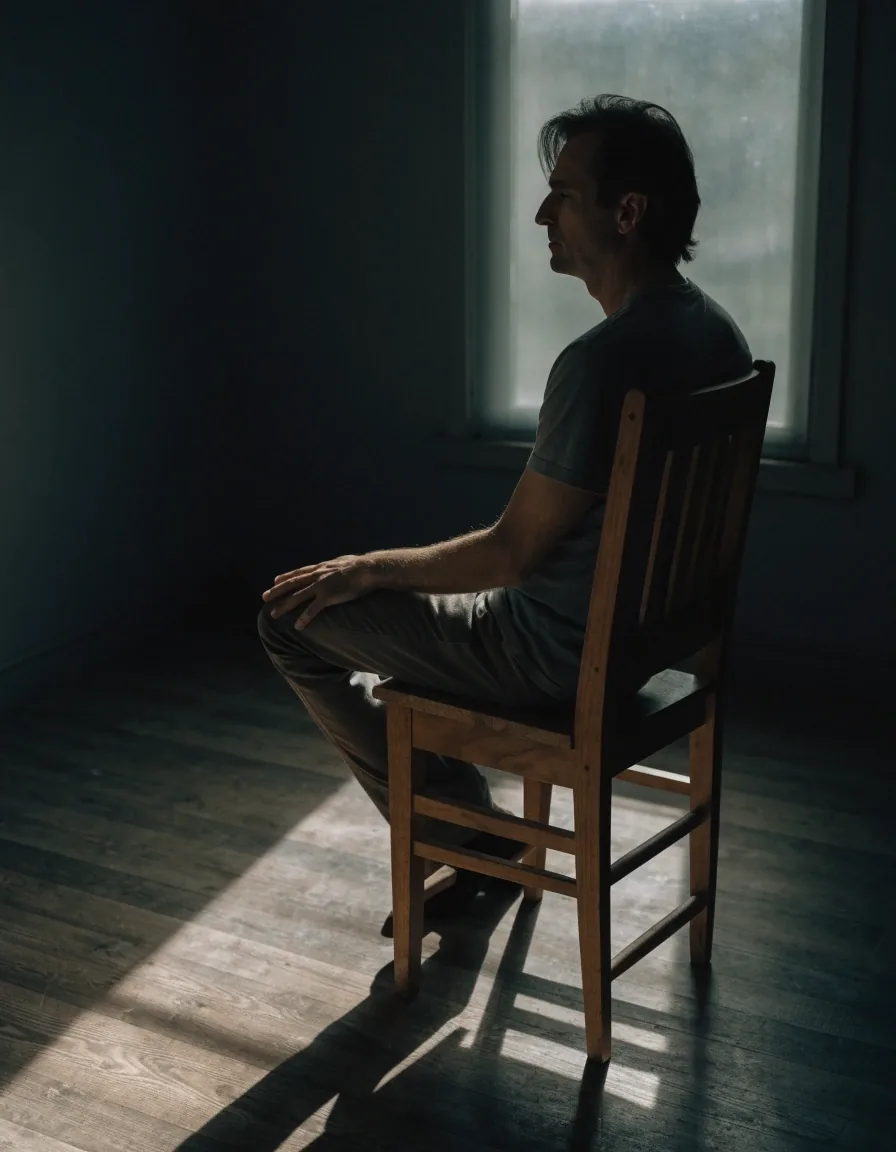
Coughing, sneezing, and lifting ask the same group for a fast answer.
Bladder control is the reason most men start reading
The situations that come up are specific and ordinary: a leak when you cough, when you sneeze, when you lift, or when you exert yourself. Public health and hospital education pages describe it in roughly these terms, as a functional issue rather than something dramatic. That framing is deliberate, and it is the one this site uses.

The same group is part of both bladder and bowel control.
Bowel control and the same muscle group
Bowel control is mentioned alongside bladder support in major health education material, and it involves the same group of muscles. It gets less attention in casual conversation, which is understandable, but it is part of the description of what the pelvic floor supports. Knowing this matters because a routine aimed at one issue is working on the same anatomy as the other. It is one more reason the guidance tends to be about general pelvic floor condition rather than a single symptom.
It also explains why the cues overlap. The timing you learn for one situation carries into the other, and the release between contractions matters in both. If you are working on one and notice the other, that is expected. What this site does not do is promise an outcome for either.
Finding the muscle by feel
The standard discovery cue is to squeeze as if stopping the flow of urine. It is quick and it usually works. What several guides add is a warning: do not turn this into a habit of repeatedly stopping urine mid-flow. That is a way to identify the muscles once, not a training method, and practising it regularly can interfere with normal bladder emptying. Find the sensation, then move your practice away from the toilet.
A second cue that some men find easier is to think of the feeling of holding back wind. It recruits the same area from a different starting point, and it avoids the toilet entirely. Whichever cue you use, hold the squeeze lightly, breathe out as you do it, and let go fully before the next one.
What a correct contraction should not feel like
A correct contraction does not require your stomach, thighs, or buttocks. If those are gripping, the effort is spreading and the pelvic floor is not doing the work on its own. You should also be able to breathe while you hold, which is why counting out loud is such a common cue in men's Kegel instructions. Straining is a sign to stop the set, not to push through it.
Signs the effort is spreading
The stomach draws in hard, the buttocks clench, the thighs press together, or the breath stops. Each one points to a neighbouring group taking over. Ease off, reset your posture, and try a gentler squeeze.
Signs to stop the set
Straining, breath-holding, or a push-down feeling at the base of the pelvis are all reasons to end the set and rest. Training is meant to be a light, controlled effort, not a push through resistance.
Breathing as a check
Count out loud through the hold. If the counting stops, so has the breathing. A held breath raises pressure in the abdomen, which works against what the contraction is meant to do.
The release matters as much
A full release between contractions is part of the practice. Holding the squeeze and skipping the release trains a habit of tension, which is the opposite of what most men are working towards.
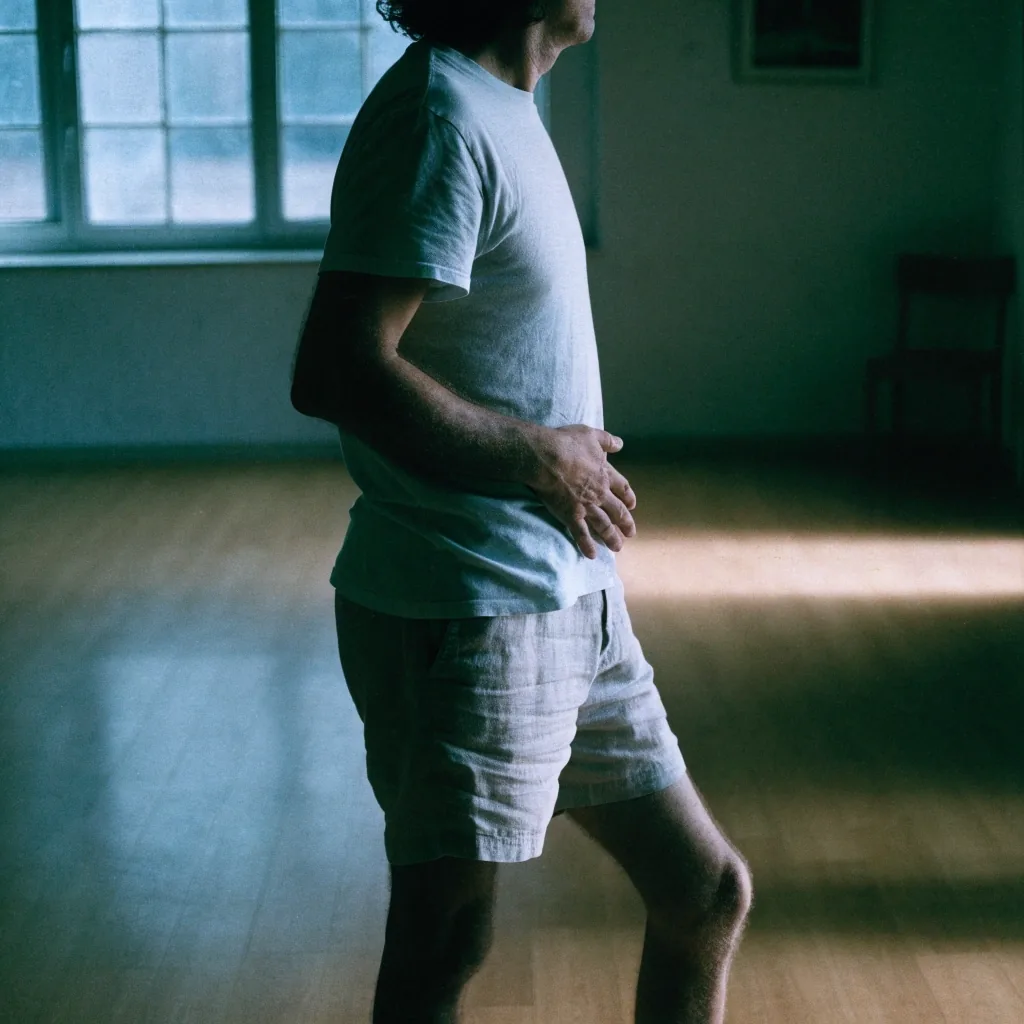
A simple mat on a quiet floor is enough to begin learning the movement.
Why assessment comes up so often
One men's pelvic health article published in 2024 notes that Kegel exercises can have a place in discussions about pelvic floor pain and dysfunction, and it stresses getting assessed first so the approach is appropriate. That is a measured position, and it applies here too. Some pelvic floors are weak, some are over-tight, and the same routine does not suit both. If you are unsure which situation you are in, an assessment answers the question faster than guessing.
It is also the honest answer to a common question. If the movement stays unclear after a few honest attempts, or if leakage is changing how you plan your day, or if there is pain, that is the moment to have someone look at it rather than adding more repetitions. This page explains the anatomy. It does not replace a conversation with a qualified professional, and nothing here should be read as a diagnosis.
Slow contractions, short sessions, full release
What training involves in practice
Training means slow, controlled contractions with a full release between them, done in short sessions across the week. It is not a workout you push through. The position you practise in can start lying down and move to seated and standing as the movement becomes familiar. Our Kegel exercises guide covers the timing, and the daily routine page covers how to fit sessions into a normal week.
Start lying down
Gravity is off the equation and the surrounding muscles are easiest to keep quiet. Most men find the sensation here first.
Then seated
A chair adds a little load and brings the practice closer to the positions you already spend your day in. Expect the squeeze to feel smaller at first.
Then standing
Standing is where the group works hardest against gravity. Move here once the movement is familiar, not before.
Keep sessions short
Short sets across the week beat one long session. Quality of contraction and a full release matter more than how many you manage.
Where to go next
The basics are here. The timing, the positions, and the weekly structure each have their own page so you can read the part you need without wading through the rest.
Common questions
Three answers that come up most often when men read about the pelvic floor for the first time.
Is the pelvic floor the same as the muscles used to stop urine?
It is the same group. Stopping urine flow is a common way to locate the sensation, but guides warn against using it as repeated practice.
Can pelvic floor training help with bowel control?
Bowel control is mentioned alongside bladder support in health education material, and it involves the same muscle group. This site does not promise outcomes for either.
Do I need an assessment before starting?
Not always, but it is the sensible step if you have pain, if the movement is unclear, or if leakage is affecting your day. One 2024 men's pelvic health article recommends assessment first so the approach is appropriate.
Ready to put the basics to work
You now know where the muscles sit, what they support, and how a correct contraction should feel. The next step is the routine itself, or a weekly structure if you would rather plan it out first. If you want to ask something before you begin, the contact page lists our office hours and email.
Where we are
Jl. Kemang Raya No. 28, Bangka,Mampang Prapatan, Jakarta Selatan,
DKI Jakarta 12730, Indonesia
- Phone
- +62 21 573 1838
- [email protected]
- Hours
- Monday to Friday, 9:00 AM – 6:00 PM (WIB)
This page is educational. It describes anatomy and general practice cues, and it does not diagnose a condition, promise an outcome, or replace a conversation with a qualified professional. If you have pain, bleeding, or sudden changes in bladder or bowel control, seek medical advice. Questions about this content can go to [email protected] during office hours.